Skip to content
Allies Until the Next Bend

A book on leadership, strategy and team performance

Allies
Until the
Next Bend

What Cycling Teaches Us About Leadership, Strategy and Team Performance

Rui Gomes

What do you do when the person you need today may be the competitor you face tomorrow?

Read an ExcerptAvailable soon
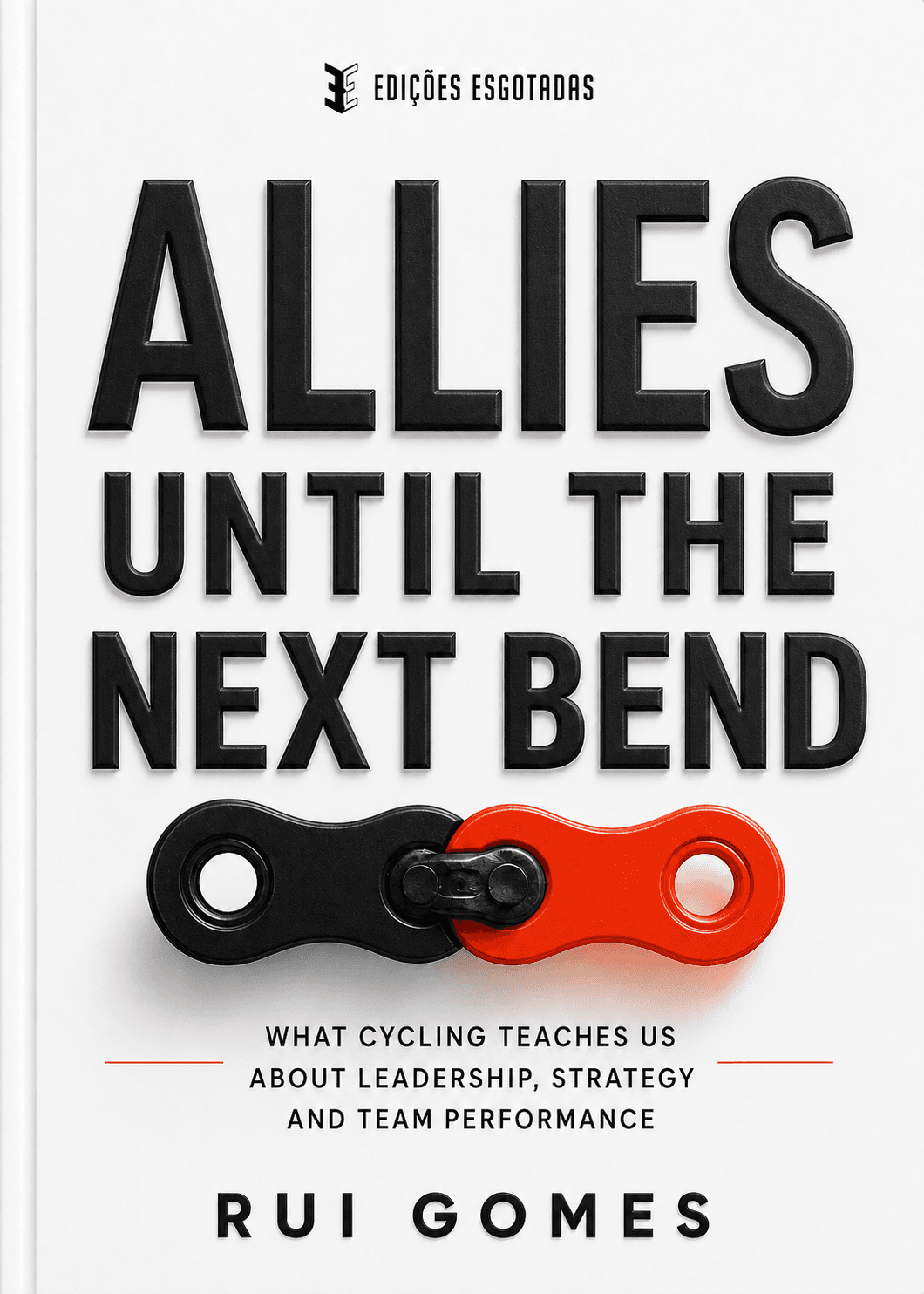
Book cover of Allies Until the Next Bend, by Rui Gomes, published by Edições Esgotadas

Mergers. Cross-functional teams. Suppliers who are also competitors. Leadership gets complicated wherever interests overlap without fully aligning.

Sometimes whoever helps you escape is the same one you will have to beat at the finish.

Competitors can still be allies.

For a while, your interests align.

You share the work.

You fight the same wind.

You build the gap together.

Partnerships, joint ventures and departments sharing a deadline live by the same logic.

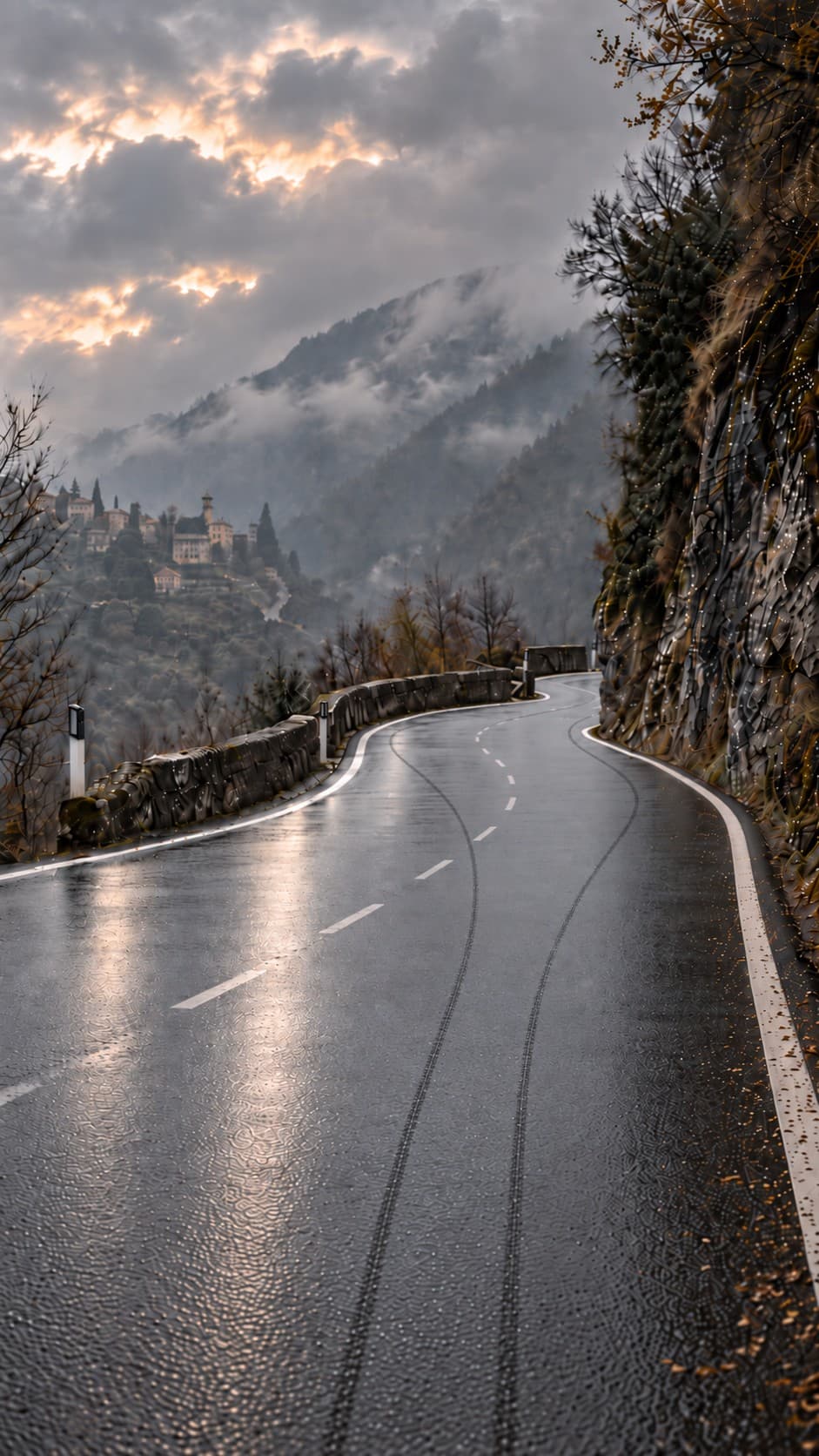
A mountain road winding past a hilltop village at dusk, storm clouds breaking above the valley

Stories

What the Road Reveals About Organisations

Leadership, strategy and teamwork become easier to see when decisions have nowhere to hide.

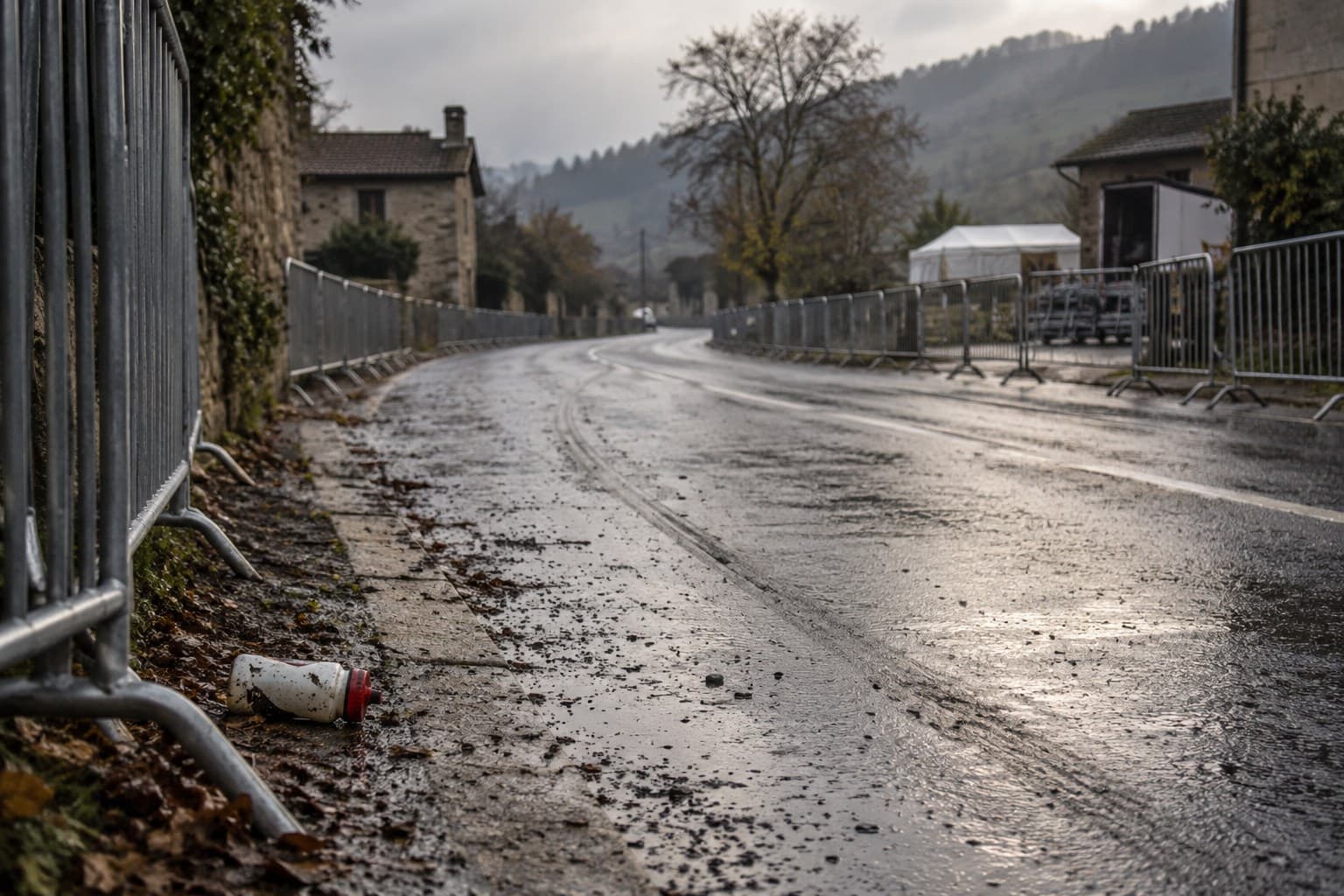
An empty, rain-slicked street lined with crowd barriers after a race has passed

The result is only the last trace of a much larger system.

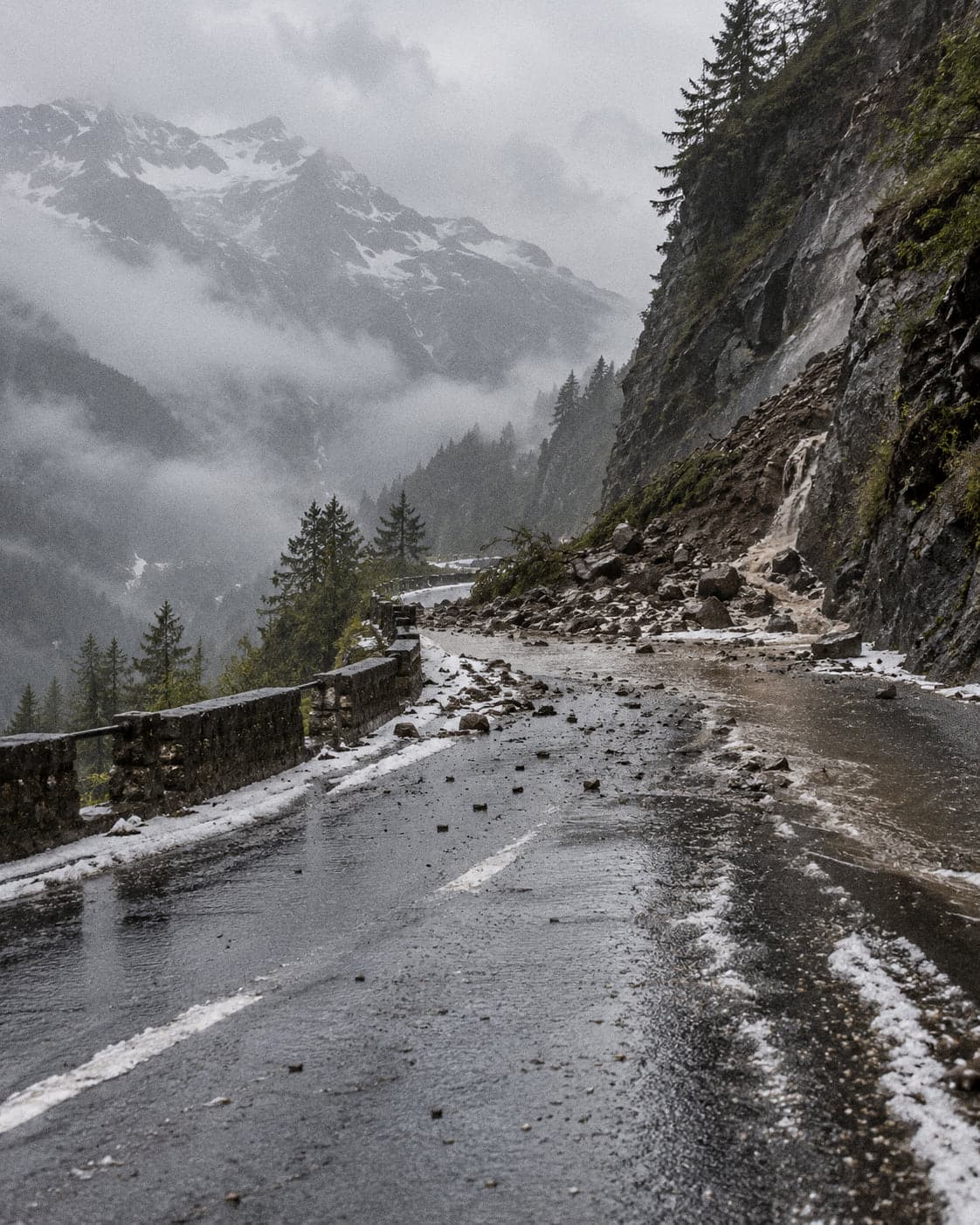
A mountain road half-buried by a fresh landslide, rock and mud across the tarmac under low cloud and hail

Don't rewrite the past to fit the present

A decision can be sound and still owe part of the result to luck. Both are true.

When conditions change abruptly, organisations tend to rewrite the story so the new situation looks like it always confirmed the plan. If it went well, the strategy was brilliant; if it went badly, the shock was impossible to foresee. The honest version is less tidy: a call can be competent and still owe part of the result to circumstance. Maturity is learning from the outcome without falsifying the cause.

Stage 19 of the 2019 Tour de France was meant to finish high in the Alps, at Tignes. On the Col de l'Iseran, the highest point of the race, Egan Bernal attacked and crossed the summit alone, ahead of the race leader. Then a hailstorm and a landslide buried the descent, and the stage could not go on. Organisers stopped the race, took the times from the top of the Iseran, and declared no stage winner. Bernal, first over the summit, became the overall leader and went on to win the Tour — on a day when no one reached the finish drawn on the map.

2019 · Tour de France
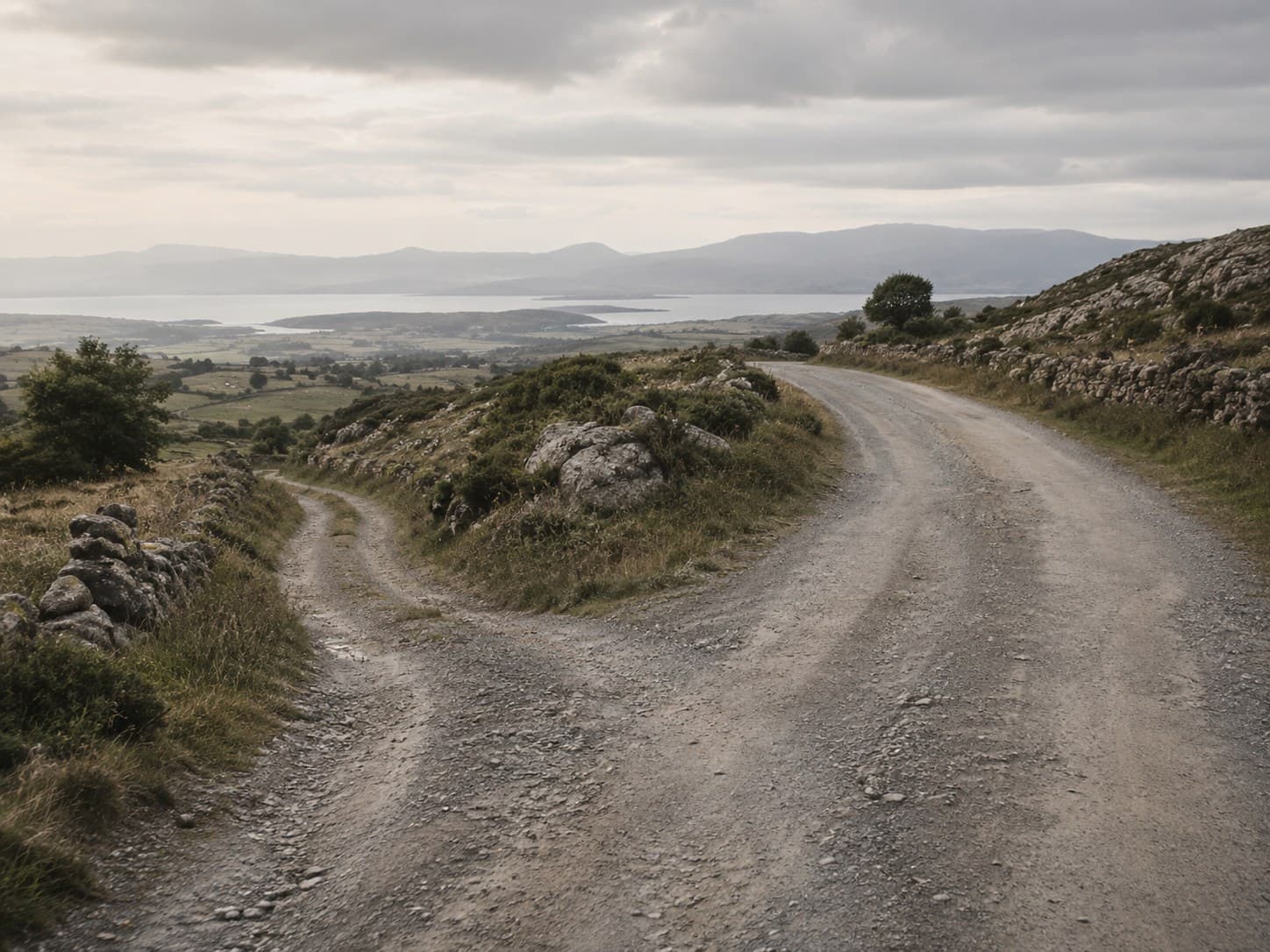
A gravel road forking into two possible routes across an open landscape

A strategy without options becomes predictable

The best move is not always the one the plan protects.

Concentrating every resource around the most obvious priority can remove an organisation's optionality. A secondary rider, initiative or capability can become strategically decisive exactly when conditions change — not because there was a backup plan, but because the primary strategy was never the only path left open.

Paris-Roubaix is one of cycling's hardest one-day races: long sectors of rough farm cobbles, brutal and unpredictable. In 2011, Garmin-Cervélo built its plan around its stars. Johan Vansummeren, a teammate almost no one marked as a contender, had room to ride his own race — and used it. He went clear early, stayed away while the favourites watched each other, and was alone in front when his rear tyre punctured near the end. He entered the Roubaix velodrome on a collapsing wheel and won anyway.

2011 · Paris-Roubaix

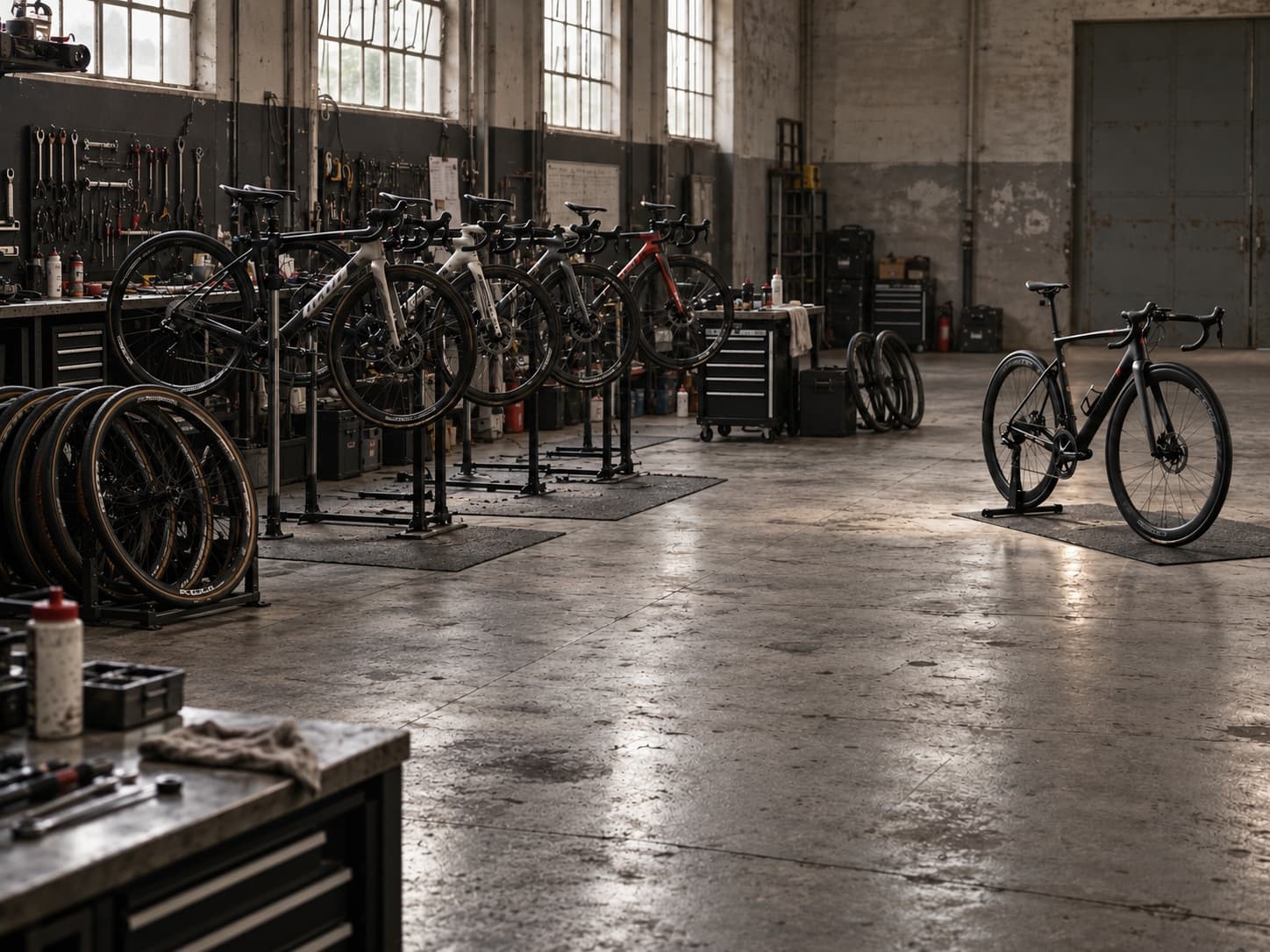
A team workshop lined with bikes, wheels and tools, with a single bike standing alone in the open floor beyond

Dependence is not efficiency

One exceptional person can carry a weak system. Until they can't.

Organisations often confuse exceptional individual performance with organisational strength. A person who repeatedly solves every critical problem can make a weak system look efficient — right up to the moment they finally need the system behind them, and it isn't there.

Tom Dumoulin, a rider built for time trials rather than mountains, held the leader's jersey deep into the final week of the 2015 Vuelta a España. Fabio Aru's team had what Dumoulin's increasingly lacked: several strong climbers who could keep attacking, one after another. On the last mountain stage they did exactly that. Aru attacked and Dumoulin closed the gap; Aru went again and Dumoulin clawed back; the third time, he had nothing left. He lost almost four minutes, and the race, in a single afternoon — dropping to sixth overall.

2015 · Vuelta a España

A man in a city apartment at dawn, holding a road bike, looking out over the skyline through a floor-to-ceiling window

A sacrifice you don't acknowledge becomes a debt

Asking someone to hold back for the team is a real cost, not a neutral instruction.

Teams routinely ask individuals to subordinate their own ambition to a collective plan. That can be the right call — but it is never free. The organisation that asks for it owes three things in return: to acknowledge the cost openly, to explain the decision, and not to let a temporary loyalty harden into a vague promise it never intends to keep.

At the 2012 Tour de France, Team Sky was riding to make Bradley Wiggins the first British winner. His teammate Chris Froome, there to support him in the mountains, kept looking like the stronger climber. On the climb to La Toussuire he rode clear of Wiggins, was told by radio to slow and wait, and did — then again on stage 17. The tension went public. Wiggins won the Tour; Froome finished second, and won it himself the next year — the first of four.

2012 · Tour de France

One person steadying the saddle while another, in a wool coat, learns to balance on a bicycle on a wet road at dusk

Learning is a discipline, not a byproduct

Skill rarely arrives just by being near the work. Someone has to decide to build it.

Organisations tend to treat capability as binary: a person has it or they don't, and training is something done once, at the start. Real skill-building is slower and more deliberate — broken into stages, done badly before it is done well, and kept up long after someone is considered experienced. It is also the first thing cut when time is short, and the first thing assumed for anyone already senior.

In the early 1890s Frances Willard was one of the most prominent public figures in the United States. At fifty-three she decided to learn to ride a bicycle, and treated it as serious work — falling, remounting, breaking the skill into stages over months. In 1895 she published a short book about it: as much about the discipline of learning something hard, in public, well past the age when it is expected, as about the bicycle. She called it “a teacher without a pulpit or a creed.”

1895 · A Wheel Within a Wheel

Book cover of Allies Until the Next Bend, by Rui Gomes, published by Edições Esgotadas

The Book

Cycling is the lens. Organisations are the subject.

Competitive road cycling is full of a paradox that leaders live with every day: rivals who need each other, for a while.

In a breakaway, competitors share the work, take turns in the wind and build a gap together — each one still riding for the win. Cooperation is rational for as long as interests are aligned. Then the road bends, conditions change, and someone attacks.

Allies Until the Next Bend uses the logic of the road to examine how leaders read timing, build trust under pressure, and recognise the moment cooperation stops being the best strategy.

The road does not care about plans. It tests strategy, trust, timing and resolve in real time — which is exactly why it exposes questions about leadership, teams and decision-making that boardrooms often leave comfortably unresolved.

AuthorRui Gomes
PublisherEdições Esgotadas
EditionEnglish edition
LanguageEnglish
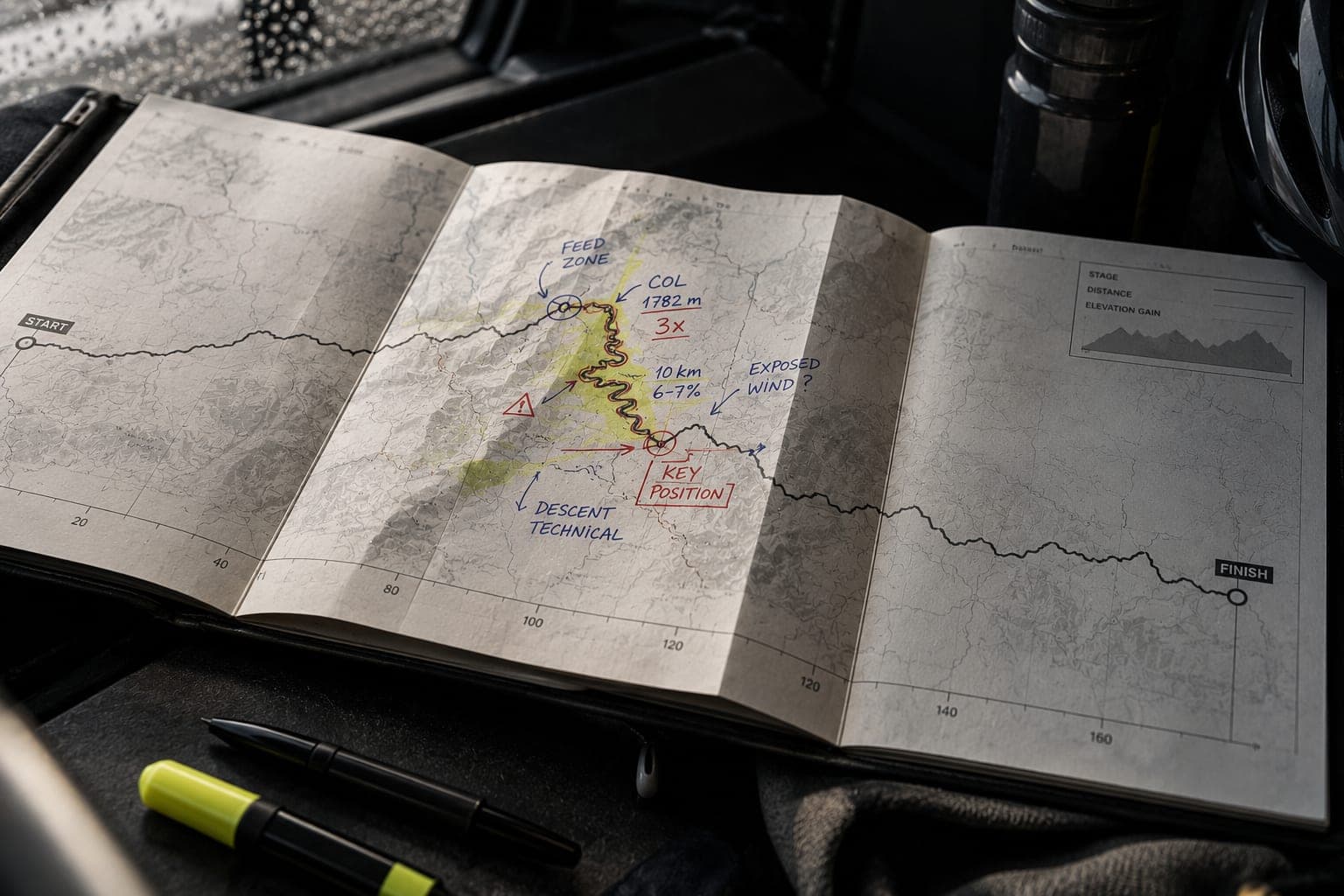
An open roadbook on the floor of a team car, the stage marked up by hand: feed zone, the climb, the exposed section and the key position, a highlighter and marker beside it

The Breakaway

Cooperation has a shelf life.

Cooperation doesn't have to last to be real.

None of them can hold the pace alone, so they take turns in the wind and let the gap grow, for as long as it serves them all. The strongest alliances are explicit about where that cooperation begins, what stays protected, and when it ends. Sooner or later, the interests that were aligned stop being aligned. Recognising that moment, and acting on it, is not aggression. It's timing.

The Bend

For kilometres, they work together.

Then the road bends.

The conditions change.

Someone attacks.

Off the road, the moment is just as physical: the case for cooperation has to be made again.

Reference Glossary

From Cycling to Leadership

The road has its own vocabulary. Leadership speaks it too.

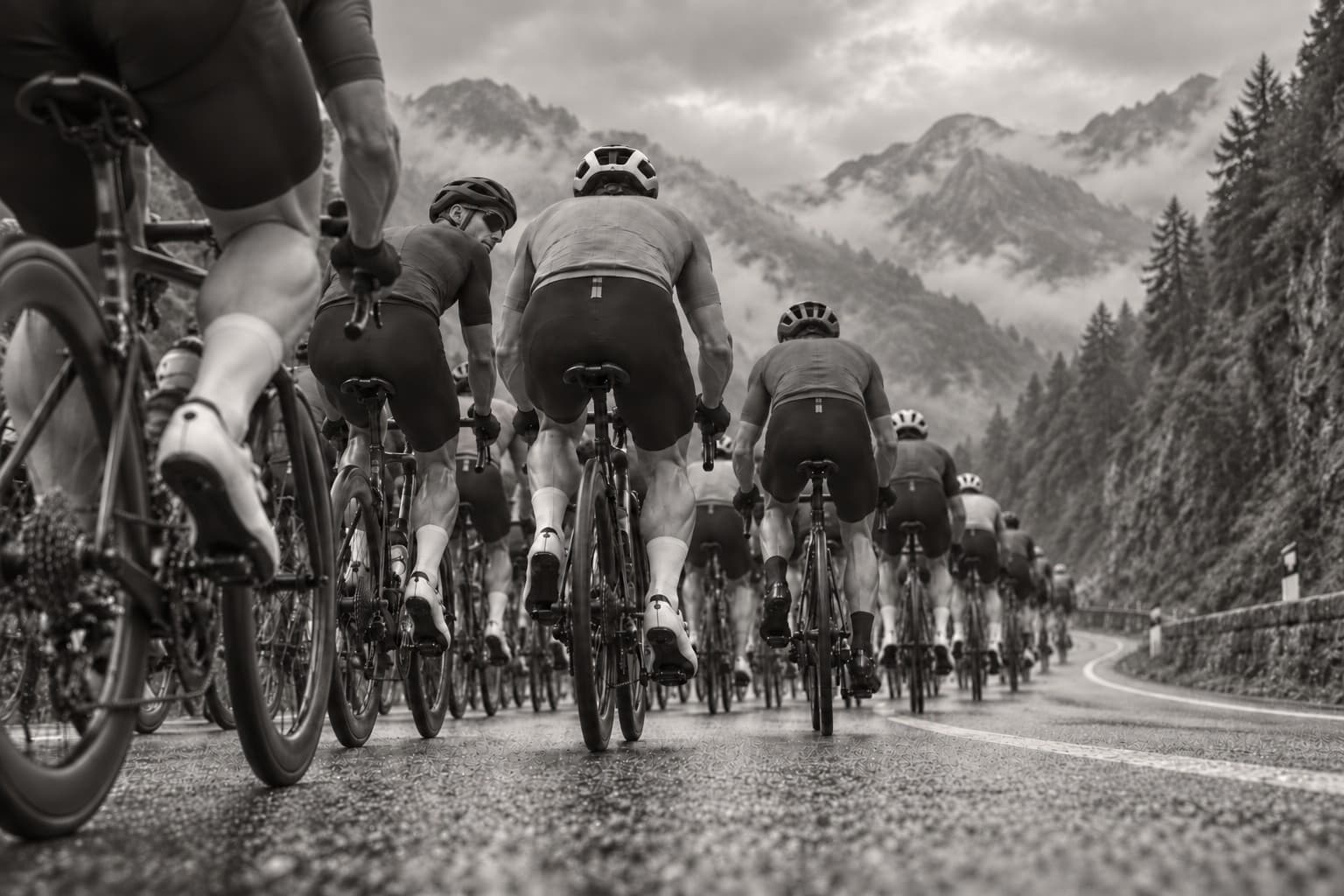
The view from inside a dense pack of riders, packed tightly together on a mountain road

Peloton

The organisation you operate inside: an industry, a market, a large company structure where your position determines how much resistance you feel.

Breakaway

The opportunity to create separation: a joint venture, a strategic partnership, a spin-off team formed to move faster than the parent company.

Draft

Trust and dependence: a supplier setting your delivery schedule, a partner setting the pace of a shared project.

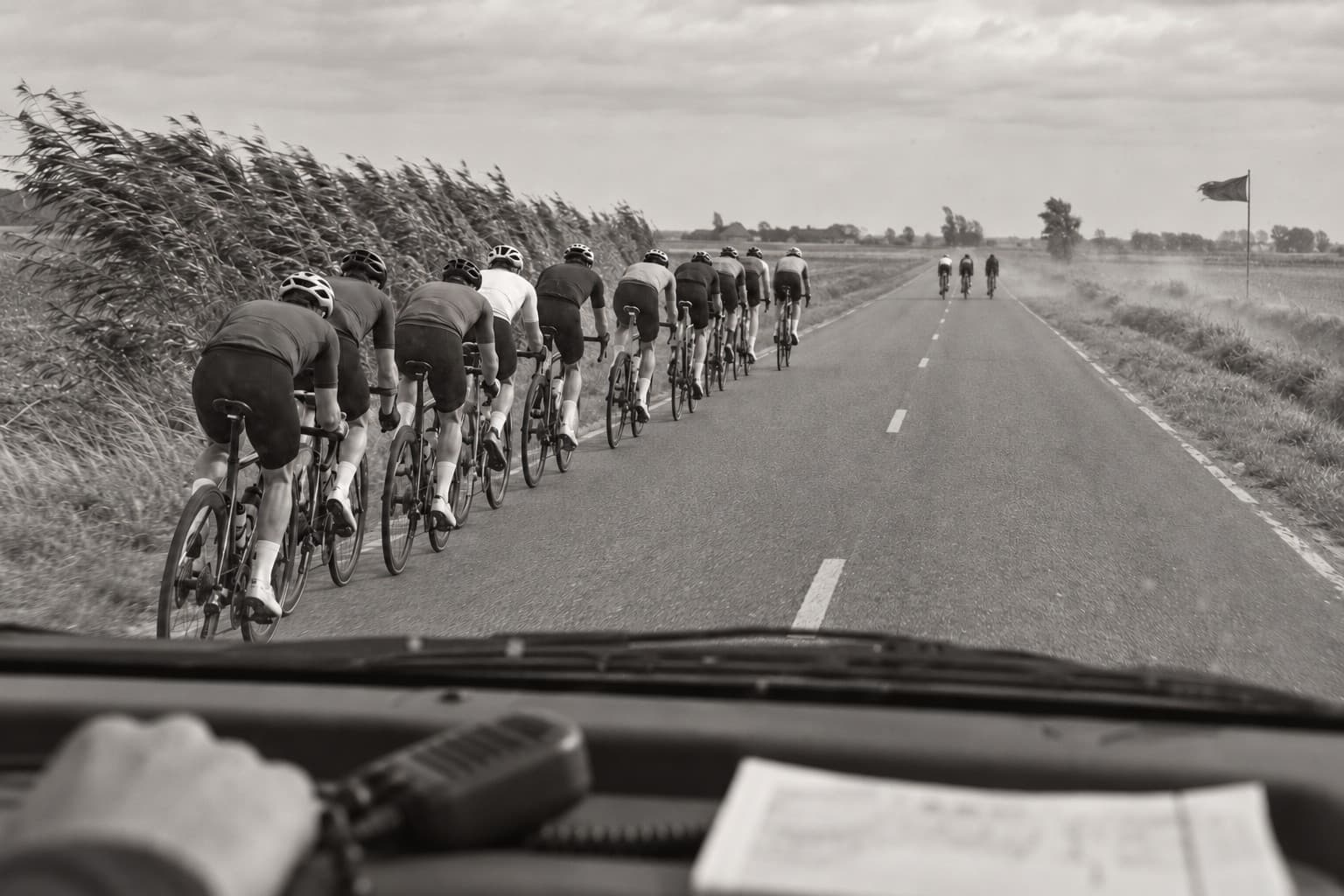
A long single-file line of riders on an exposed flat road, vegetation bent sideways by the wind

Domestique

A differentiated contribution that makes someone else's win possible, not the same thing as having no ambition of your own.

Road Captain

Leadership distributed to whoever is closest to the decision, not reserved for whoever has the title.

Wind

Market conditions, regulation, a competitor's move: pressure no single company controls.

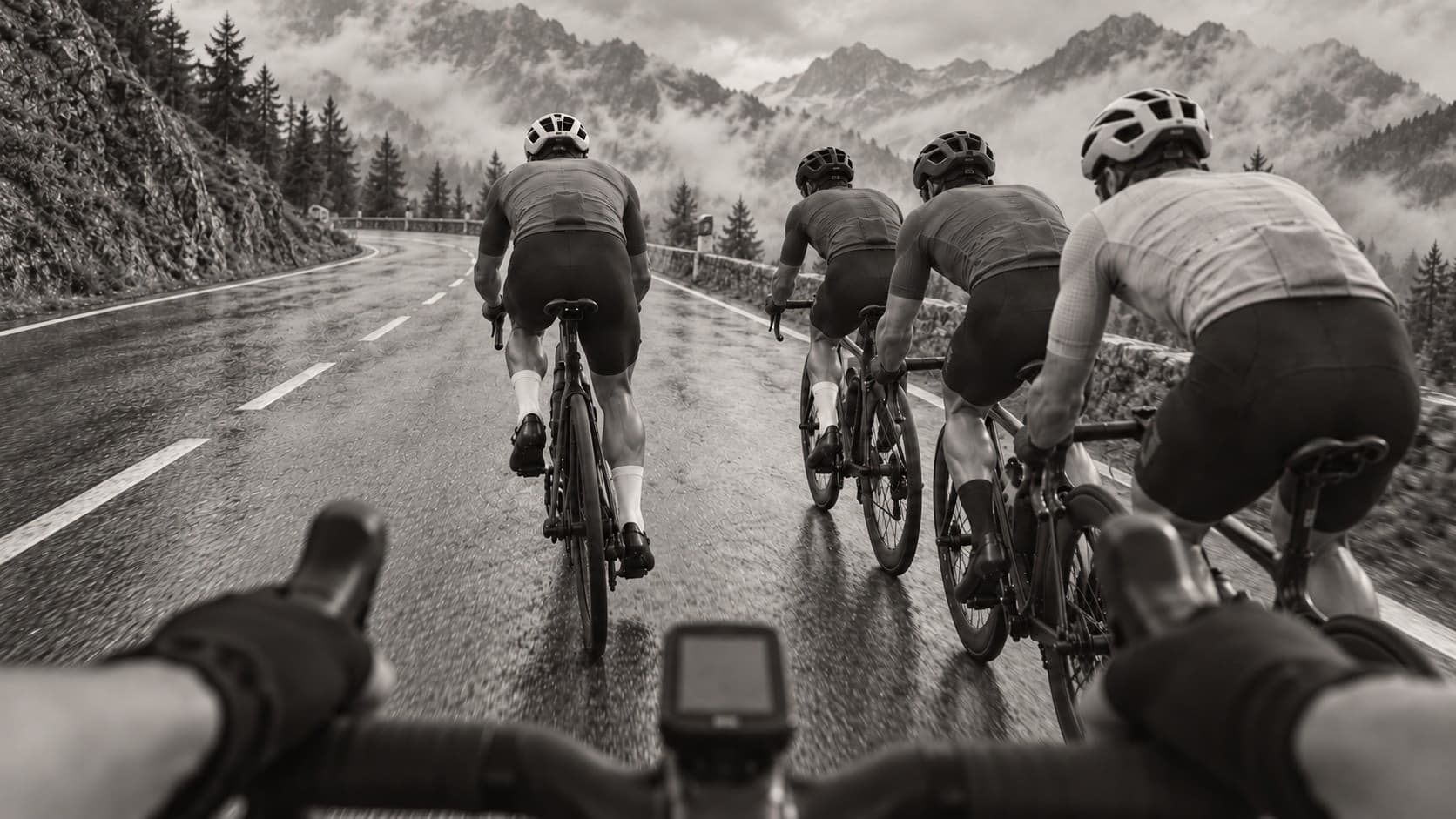
The view from within a team of riders, seen over the handlebars, as riders ahead hold a synchronised line

Crosswind

A shift severe enough that the structure built for yesterday's conditions is the wrong one for today's.

Team Car

The best information is not always where the most authority sits. Good leadership design moves decisions to whoever can see the road.

Attack

A competitor changes price, a partner changes terms, a market shifts, and someone has to decide, now.

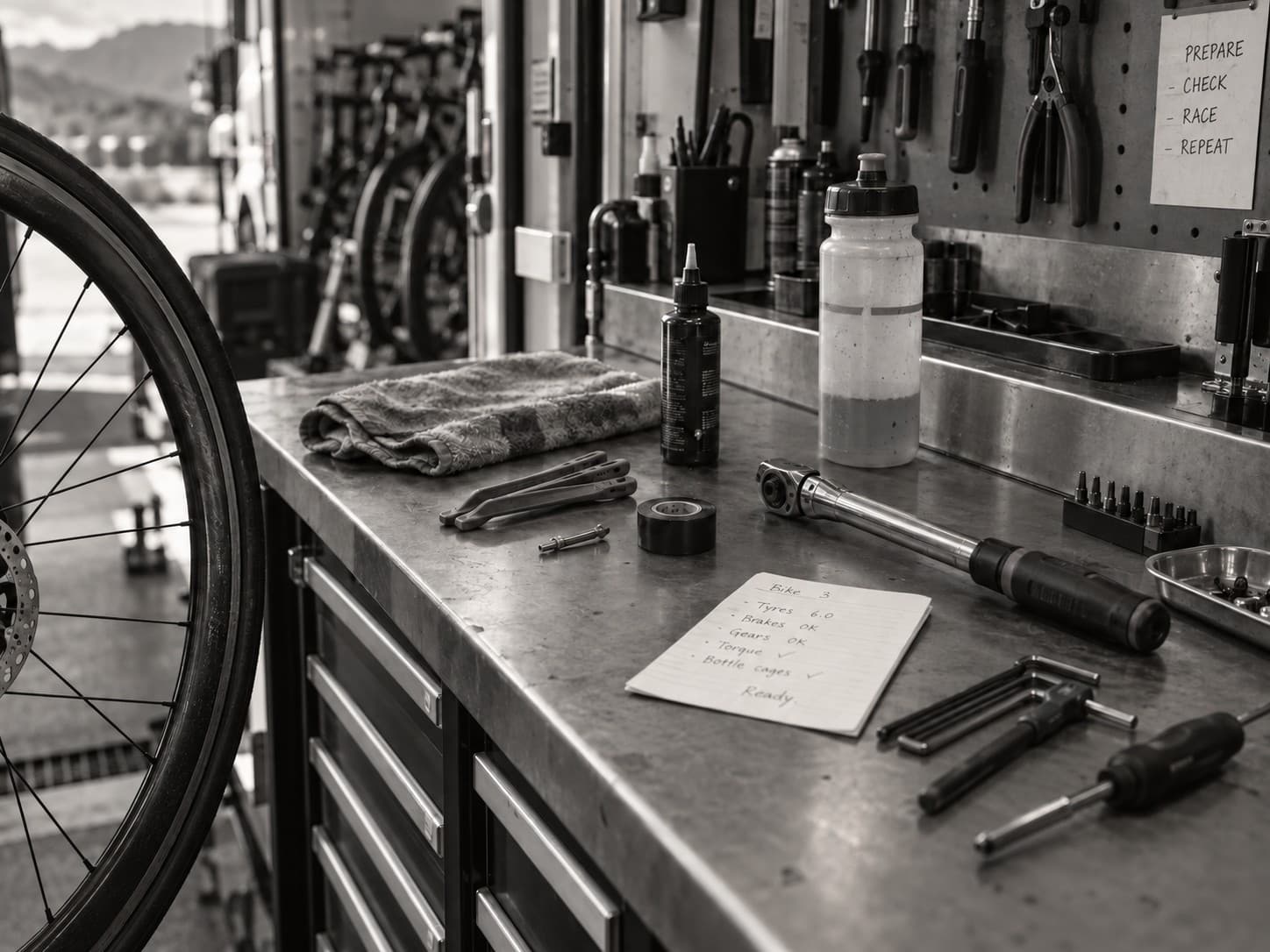
A handwritten pre-stage checklist on a workbench surrounded by tools and a spare wheel

Team

Synchronised doesn't mean uniform. It means different people doing different things, at the right moment.

Lead-out

The person visible at the finish rarely explains the result alone. Sequencing and handovers produced it long before the line.

Mechanic

The invisible preparation and capability the result depends on, and that nobody photographs.

Bend

A merger falls through, a key partner leaves, a market disappears overnight.

Finish

The result the board sees, built by decisions made months before anyone was watching.

Selected Ideas

The org chart says who reports to whom. It doesn't say who you can depend on when it matters.

Organisations rarely fail inside a task. They fail at the interfaces between them.

Users logging in is not adoption. A workaround can make a failing system look like it works.

Yesterday's shortcut can become tomorrow's operating model.

Reality does not need your agreement. Strategy begins once you accept it exists.

Every partnership has an expiry date. The skill is not being the last to notice.

The best successor is not always the one next in line.

Allies until the next bend.

Rui Gomes, author of Allies Until the Next Bend, holding a copy of the book

Author

Rui Gomes

Technology executive, professor and author at the intersection of digital transformation, healthcare and leadership.

For nearly three decades, his work has centred on technology leadership and organisational transformation in healthcare. For fifteen years he followed cycling as an enthusiast, with a close eye on mountain biking, track and road racing. In five of those years he was also a team's sporting director. He teaches and serves as an expert evaluator for the European Commission. His particular interests are risk management, emerging technologies and the way technology, people and organisations change together.

Lean Six Sigma Black Belt · GenAI Specialist (EITCA)

28+

Years leading technology

100+

Professionals recruited into his teams

20+

European expert assignments

400+

Keynotes, talks & panels

Buy the Book

Allies Until the Next Bend

Available soon

The race continues.

The next bend is ahead.

Book cover of Allies Until the Next Bend, by Rui Gomes, published by Edições Esgotadas
Read an ExcerptAvailable soon